Last month, Plexal pulled out our shiniest pair of ceremonial scissors to cut the ribbon on the TechFirst Women’s Programme, which we’re delivering on behalf of the Department for Digital, Culture, Media and Sport. Opening applications during Ada Lovelace Day, we’ve since received an incredible response – including BBC airtime.
Together, we’re helping employers access new talent across high-growth technology sectors – AI, cyber security, engineering biology, quantum technologies, semiconductors and advanced communications – as we guide 300 women into paid roles.
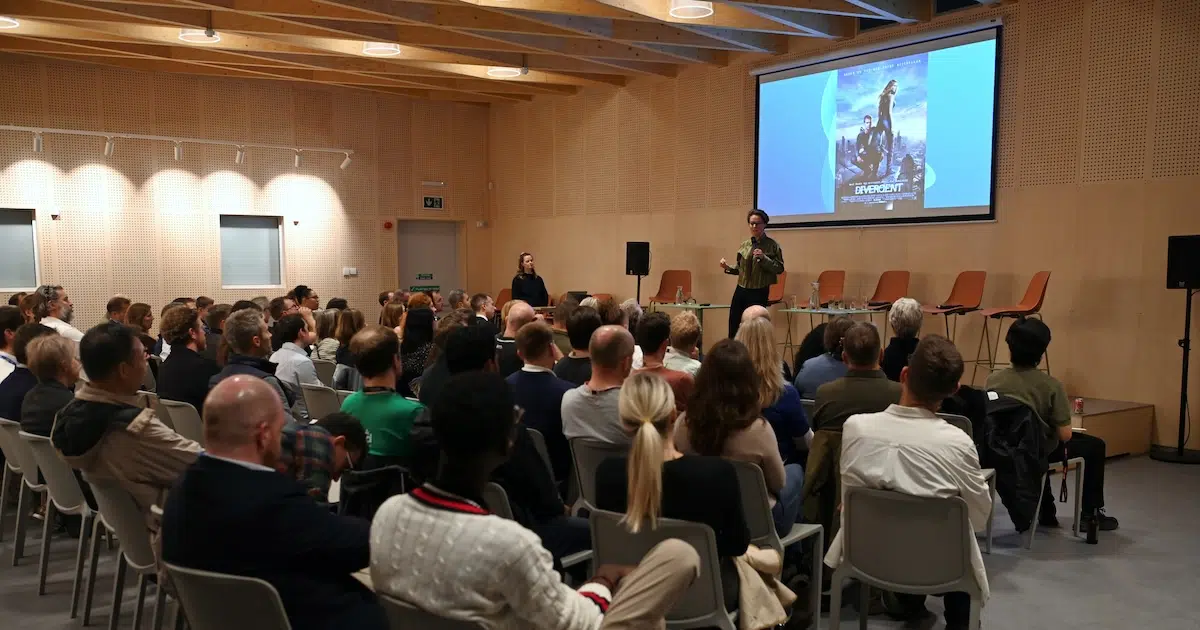
Building on applications opening, it was fantastic to see programme enthusiasm manifest in the North West as we held our in-person launch event at the Science and Industry Museum in Manchester this month.
Alongside core programme delivery partners WeAreTechWomen, Beta Technology, CAPSLOCK and Sanderson, our launch event felt like a real moment in time and it was clear this was the start of something truly impactful. Employers, government departments and organisations, universities, training partners, recruiters and talent from across the tech ecosystem entered a space where they could be heard.

During her welcome speech, Diane Gilbert, Director of Programmes at Plexal, said: “We’re building a community where women can make meaningful connections. To paraphrase Spider-Man: with a huge response comes huge responsibility. Diversity of thought stimulates innovation and helps create structural change.”
Our guests shared stories, recognised talent and challenged traditional recruitment routes to build workplaces where women can thrive. This isn’t a case of just opening doors, but supporting lasting careers through progression, flexibility and sponsorship.
Here’s what else was covered during the event.
Women don’t need to start again
Setting the national context, Samantha Niblett, MP for South Derbyshire, urged attendees to think differently about where technology talent comes from.
Representing more than a fairness issue, she positioned women’s participation in technology as an economic imperative. While the UK technology sector contributes £158bn to the economy and employs around 1.33 million people, women account for just 21% of the workforce.
“This isn’t simply about representation,” Samantha said. “It’s about economic growth and making sure Britain has the talent it needs.”

Throughout the day, one message came through loud and clear: women don’t need to start from scratch to succeed in technology.
Many of the TechFirst Women’s Programme applicants already possess the skills employers are searching for, whether they’re leading teams, managing risk, delivering organisational change, working in healthcare or navigating complex stakeholder relationships.
The challenge isn’t a lack of capability, but recognising how those capabilities translate into technology careers.
As Samantha put it: “Women already have skills, experience and capabilities. The ambition can’t simply be to get women through training. The goal is secure, well-paid jobs and lasting careers.”
The cost of overlooking talent
Deborah O’Neill from Oliver Wyman reinforced Samantha’s argument and shared findings exploring why women leave technology roles and the impact this has on the economy.
The research from the Lovelace Report, authored by WeAreTechWomen and Oliver Wyman, found women exiting the industry are costing the UK economy between £1.4bn and £2.2bn annually.
Importantly, Deborah challenged assumptions around what’s driving that trend. “Only around 15% of women leave technology because of caring responsibilities,” she explained, shattering the illusion.

Instead, a lack of progression opportunities, limited visibility of career pathways and insufficient sponsorship emerged as recurring reasons why women consider leaving the industry altogether.
“We need more than line management support,” Deborah said. “We need active sponsorship.”
While mentoring remains important, speakers repeatedly highlighted the need for leaders who are willing to advocate for talent, create opportunities and champion people into roles they might not otherwise be considered for.
Stop hiring for the perfect CV
Hosted by Vanessa Vallely, CEO of WeAreTechWomen, the Unlocking Opportunities for Women in the Technology Sector panel discussion brought together perspectives from enterprise businesses, public institutions, startups and advocacy organisations.
A significant breakthrough in the conversation was a call to challenge traditional recruitment practices.
Drawing on her experience supporting hundreds of career returners through Tech Returners and other organisations, Beckie Taylor highlighted the guesswork organisations continue to make when they see career gaps.
“There’s still a judgement attached to gaps on a CV,” she shared.
Rather than viewing career breaks as hollow time, employers were encouraged to recognise the valuable skills developed during those periods, from negotiation and communication to leadership, resilience and adaptability.
Amanda Newman, Founder of The Career Mum and Director of Strategy at Capgemini, echoed the point and encouraged organisations to recruit based on potential rather than simply replicating previous hiring patterns.

“The best places I’ve worked at recruited for potential,” Amanda reflected. “People saw something in me and gave me opportunities to grow into.”
The panellists collectively agreed that this isn’t about lowering standards but questioning whether employers are measuring the right things to begin with.
From AI-powered screening tools to rigid job descriptions and years-of-experience requirements in place, the panel challenged organisations to consider whether their recruitment processes are unintentionally filtering out talent they desperately need.
Sandie Small Duberry, Deputy Governorship Chief Information Officer at the Prudential Regulation Authority at the Bank of England encouraged employers to rethink how they assess candidates altogether. “We shouldn’t be asking only whether someone can code in a particular language. We should be asking whether they can make a meaningful impact.”

The skills employers are overlooking
On the subject of capabilities that often sit beyond technical qualifications alone, Safira Adam, former Director of Digital & Technology at Marks & Spencer, described the growing importance of people who can connect technology with business outcomes.
“One of the most undervalued skills in our industry is the ability to translate technology for non-technical audiences,” Safira said.
As emerging technologies such as AI continue to transform industries, organisations increasingly need team members who can bridge technical and commercial conversations.
The ability to influence, communicate, organise and solve problems shouldn’t be treated as secondary skills. In many cases, they’re what enable technology to create meaningful outcomes.

Meanwhile, Matt Squire, CTO and Co-Founder of Fuzzy Labs, challenged startups and SMEs to recognise the strengths people from non-traditional backgrounds bring into growing businesses.
“We need people who can communicate complex ideas, work across disciplines and wear multiple hats,” he said.
For organisations willing to broaden their talent pipelines, these capabilities present a significant opportunity.
Offering a learning moment, Matt added: “A couple of years ago, our business underwent some honest self-reflection and we asked trusted women in our network how our events, communications and social presence were perceived, which completely transformed our approach.
“Every employer should find a trusted critical friend who can provide that kind of honest challenge. Sometimes organisations need a little tough love if they want to create meaningful change.”
A challenge to employers
Closing the event, Cian Galvin, Head of Tech Skills Unit at DCMS, reinforced what many speakers had already highlighted.
Technology employers consistently tell government that skills shortages are one of their biggest challenges. At the same time, talented women continue to encounter barriers entering and progressing within the sector.
Programmes such as TechFirst Women’s Programme provide an opportunity to change that.

“The women coming through TechFirst Women’s Programme can help organisations innovate, grow, improve productivity and achieve better outcomes,” Cian said.
His ask to employers was simple: commit to one action.
Whether that’s reviewing recruitment criteria, offering placements, becoming a hiring partner, providing sponsorship opportunities or simply challenging assumptions about what technology talent looks like, every action contributes to building a stronger and more inclusive sector.
Judging by the energy in the room, this is only the beginning.
Are you interested in becoming a TechFirst Women’s Programme employer partner? Discover how your organisation can access skilled talent across AI, cyber security, engineering biology, quantum technologies, semiconductors and advanced communications while helping build a more diverse technology workforce: https://www.techfirstwomen.com/#employers